


Students' attitudes towards inclusive school practice

https://doi.org/10.26795/2307-1281-2025-13-4-7
Abstract
Introduction. Healthy students are actors that influence the success of inclusive practice. Their attitude to inclusion determines the psychological microclimate in the classroom, the nature of interpersonal interaction with peers with disabilities. Denial of inclusive values entails the risk of social ostracism and exclusion, and acceptance ensures the formation of a truly inclusive children's team interacting on an equal basis. Studying the attitude of healthy students to inclusive practice is important for determining preventive measures to prevent destructive processes in the educational space of the school.
Materials and methods. The method for studying the attitude of healthy students to inclusive school practice was a questionnaire. The participants of the study were 76 teenagers aged 12 to 14 years.
Results. Healthy students, whose share was no more than a sixth of the respondents, expressed an unambiguously negative attitude towards inclusive school practice through answers to the questions of the questionnaire. A quarter of the study participants assessed inclusive processes as natural. Their attitude towards classmates with health problems is positive. The remaining respondents did not have a clear position on inclusion. These schoolchildren demonstrated an indifferent attitude towards joint education with peers with developmental disabilities.
Discussion and conclusions. A positive attitude of healthy students towards inclusive school practice is possible only in an educational environment with an inclusive culture. Denial of inclusive values does not ensure that students with disabilities acquire socializing experience. Recognition of the value of inclusion is demonstrated by healthy students who have developed constructive interpersonal interactions with classmates with disabilities.
About the Authors
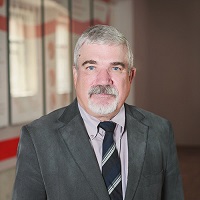
S. V. Velieva
Yakovlev CHSPU
Russian Federation
Russian Federation
Svetlana V. Velieva, Candidate of Psychological Sciences, docent, docent of the Department
Preschool Pedagogy and Educational Psychology Department
Cheboksary
T. Yu. Chetverikova
Omsk State Pedagogical Universit; Institute of Special Education
Russian Federation
Russian Federation
Tatiana Yu. Chetverikova, Candidate of Pedagogical Sciences, docent, Head of the department, Senior Research Fellow
department of Defectology education
Omsk; Moscow
References
1. Bol'shakov N. V., Dolgova E. M. Inclusive Education in the Post-Socialist Space: A Comparative Analysis of Parental Satisfaction. Voprosy obrazovaniya, 2022, no. 1, pp. 54-74, doi: 10.17323/1814-9545-2022-1-54-74. (In Russ.)
2. Vikzhanovich S. N. Prevention of Bullying against Students with Autism Spectrum Disorders in Inclusive School Practice. Pis'ma v Emissiya. Offlajn (The Emissia. Offline Letters) : elektronnyj nauchnyj zhurnal, 2023, no. 7 (July), art 3276. Available at: http://emissia.org/offline/2023/3276.htm (accessed: 03. 02. 2025). (In Russ.)
3. Volosnikova L. M., Ignatzheva S. V., Fedina L. V., Bruk Zh. Yu. Teacher in an inclusive class: the relationship between attitudes towards inclusion and job satisfaction. Voprosy obrazovaniya = Educational Studies Moscow, 2022, no. 2, pp. 60-87, doi: 10.17323/1814-9545-2022-2-60-87. (In Russ.)
4. Zaharova M. A., Fedyushina U. I. Evaluation of the effectiveness of educational activities in an inclusive environment. Biznes. Obrazovanie. Pravo, 2025, no. 1 (70), pp. 313-320, doi: 10.25683/VOLBI.2025.70.1191. (In Russ.)
5. Il'in A. S. Features of the organization of educational work by a teacher in the context of inclusive education. Vestnik KGPU im. V. P. Astaf'eva, 2023, no. 1 (63). Available at: https://cyberleninka.ru/article/n/osobennosti-organizatsii-vospitatelnoy-raboty-uchitelem-v-usloviyah-inklyuzivnogo-obrazovaniya (accessed: 23. 04. 2025). (In Russ.)
6. Kargapolov E. P. Cultural and civilizational codes: current issues of theory. Vestnik ChelGU, 2022, no. 2 (460), pp. 27-35, doi: 10.47475/1994-2796-2022-10204. (In Russ.)
7. Korobejnikov I. A. Probabilistic Vectors of Development of Correctional Pedagogics and Special Psychology in the Modern Educational Environment. Izvestiya Rossijskoj akademii obrazovaniya, 2024, no. 4 (68), pp. 19-31. Available at: https://elibrary.ru/item.asp?id=80552994 (accessed: 23. 04. 2025). (In Russ.)
8. Krapivenskij S. E., Fel'dman E. Devaluation of Personality and Modern Personology. Filosofiya i obshchestvo, 2003, no. 4. Available at: https://cyberleninka.ru/article/n/devalvatsiya-lichnosti-i-sovremennaya-personologiya (accessed: 28. 04. 2025). (In Russ.)
9. Kuz'mina O. S. “Assessing the Development of an Inclusive Culture in an Educational Organization”. Special'noe obrazovanie i sociokul'turnaya integraciya, 2024, no. 7, pp. 192-197. Available at: https://www.sgu.ru/sites/default/files/page/files/192-197.pdf (accessed: 23. 04. 2025). (In Russ.)
10. Kuz'mina O. S. “Indicators of an Inclusive Culture in a Comprehensive School”. Pis'ma v Emissiya. Offlajn (The Emissia. Offline Letters) : elektronnyj nauchnyj zhurnal, 2023, no. 7 (July), art 3273. Available at: http://emissia.org/offline/2023/3273.htm (accessed: 02. 02. 2025). (In Russ.)
11. Nurlygayanov I. N., Solov'eva T. A., Lazurenko S. B., Golubchikova A. V. Health preservation in the education of students with disabilities: principles and organization. Psihologicheskaya nauka i obrazovanie, 2022, vol. 27, no. 5, pp. 34-45, doi: 10.17759/pse.2022270503. (In Russ.)
12. Panfilov M. S. Inclusive education in the context of a conflict of interests between parents and teachers of comprehensive schools. Nauka i shkola, 2023, no. 5, pp. 99-108, doi: 10.31862/1819-463X-2023-5-99-108. (In Russ.)
13. Proshina I. I., Raevskih A. S. Tolerant environment as one of the conditions for organizing inclusive education. Sovremennye problemy nauki i obrazovaniya, 2022, no. 3, doi: 10.17513/spno.31758. (In Russ.)
14. Sabitova V. L. Inclusive education: problems of interaction between children with disabilities and their peers. Mirovaya nauka, 2022, no. 8 (65). Available at: https://cyberleninka.ru/article/n/inklyuzivnoe-obuchenie-problemy-vzaimodeystviya-detey-s-ogranichennymi-vozmozhnostyami-zdorovya-so-sverstnikami (accessed: 22. 04. 2025). (In Russ.)
15. Slyusareva E. S. Risks of teachers in the context of implementing inclusive educational practice: an aspect of psychological safety. Chelovek i obrazovanie, 2022, no. 4 (73), pp. 61-70. Available at: https://elibrary.ru/item.asp?id=50145526 (accessed: 22. 04. 2025). (In Russ.)
16. Yakubenko O. V. Medical, psychological and pedagogical correction of clinical manifestations of aggressive behavior in schoolchildren in the context of implementing inclusive education. Terapevt, 2023, no. 8, pp. 17-22, doi: 10.33920/MED-12-2308-02. (In Russ.)
17. Fink E., Deighton J., Humphrey N., Wolpert M. Assessing the bullying and victimization experiences of children with special educational needs in mainstream schools: development and validation of the bullying behavior and experience Scale. Research in Developmental Disabilities, 2015, vol. 36, рp. 611-619, doi: 10.1016/j.ridd.2014.10.048.
18. Finkelstein S., Sharma U., Furlonger B. The inclusive practices of classroom teachers : a scoping review and thematic analysis. International Journal of Inclusive Education, 2019, vol. 25 (6), рp. 735-762, doi: 10.1080/13603116.2019.1572232.
19. Frederickson N. L., Furnham A. F. Peer-assessed behavioural characteristics and sociometric rejection: differences between pupils who have moderate learning difficulties and their mainstream peers. British Journal of Educational Psychology, 2004, vol. 74, no. 3, рp. 391-410, doi: 10.1348/0007099041552305.
20. Hanssen N. B., Erina I. Parents’ views on inclusive education for children with special educational needs in Russia. European Journal of Special Needs Education, 2022, vol. 37, no. 5, pp. 761-775, doi: 10.1080/08856257.2021.1949092.
21. Iaoli B., Septianti E., Lase A. The Role of Teachers in Dealing with Student Behavior Regarding School Rules Violations. Jurnal Pendidikan: Teori dan Praktik, 2023, vol. 8, no. 2, рp. 172-183, doi: 10.26740/jp.v8n2.p172-183.
22. Kuhne M., Wiener J. Stability of social status of children with and without learning disabilities. Learning Disability Quarterly, 2000, vol. 23, no. 1, рp. 64-75, doi: 10.2307/1511100.
23. Lobato Chaves D., de Souza M. Bullying, Prejudice and Barbarism. Creative Education, 2016, vol. 7, no. 9, рp. 1181-1188, doi: 10.4236/ce.2016.79123.
24. Ma X. Bullying in Middle School: Individual and School Characteristics of Victims and Offenders. School Effectiveness and School Improvement, 2002, vol. 13, no. 1, рp. 63-89, doi: 10.1076/sesi.13.1.63.3438.
25. Mucherah W., Finch H., White T., Thomas K. The Relationship of School Climate, Teacher Defending and Friends on Students' Perceptions of Bullying in High School. Journal of Adolescence, 2018, vol. 62, no. 1, рp. 128-139. Available at: https://www.researchgate.net/publication/321516392_The_relationship_of_school_climate_teacher_defending_and_friends_on_students'_perceptions_of_bullying_in_high_school (accessed: 23. 04. 2025).
26. Norwich B., Kelly N. Pupils views on inclusion: moderate learning difficulties and bullying in mainstream and special schools. British Educational Research Journal, 2004, vol. 30, no. 1, рp. 43-65. Available at: https://www.researchgate.net/publication/233233431_Pupils'_views_on_inclusion_Moderate_learning_difficulties_and_bullying_in_mainstream_and_special_schools (accessed: 23. 04. 2025).
27. Parada-Gañete A., Trillo-Alonso F. Good practices of educational inclusion: Criteria and strategies for teachers’ professional development. Education Sciences, 2023, vol. 13, no. 3, p. 270, doi: 10.3390/educsci13030270.
28. Sharma U., Woodcock S., May F., Subban P. Examining parental perception of inclusive education climate. Frontiers in Education, 2022, vol. 7, p. 907742, doi: 10.3389/feduc.2022.907742.
29. Ultabaini R., Kusumastuti G. The correlation study: Parental attention and learning motivation of students with intellectual disabilities. Edumaspul – Jurnal Pendidikan, 2022, vol. 6, no. 2, pp. 1416-1420. Available at: https://www.researchgate.net/publication/366010659_The_Correlation_Study_Parental_Attention_and_Learning_Motivation_of_Students_With_Intellectual_Disabilities (accessed: 23. 04. 2025).
30. Wiener J. Friendship and social adjustment of children with learning disabilities. Wong B. Y. L., Donahue M. L. (еds) The social dimensions of learning disabilities: Essays in honor of Janis Bryan. Mahwah, NJ, Erlbaum. 2002. Рp. 93-114. Available at: https://psycnet.apa.org/record/2002-01954-005 (accessed: 23. 04. 2025).
31. Yoon J., Sulkowski M. L., Bauman S. A. Teachers’ Responses to Bullying Incidents: Effects of Teacher Characteristics and Contexts. Journal of School Violence, 2016, vol. 15, no. 1, рp. 91-113, doi: 10.1080/15388220.2014.963592.
Review
Views:
321
JATS XML



 Email this article